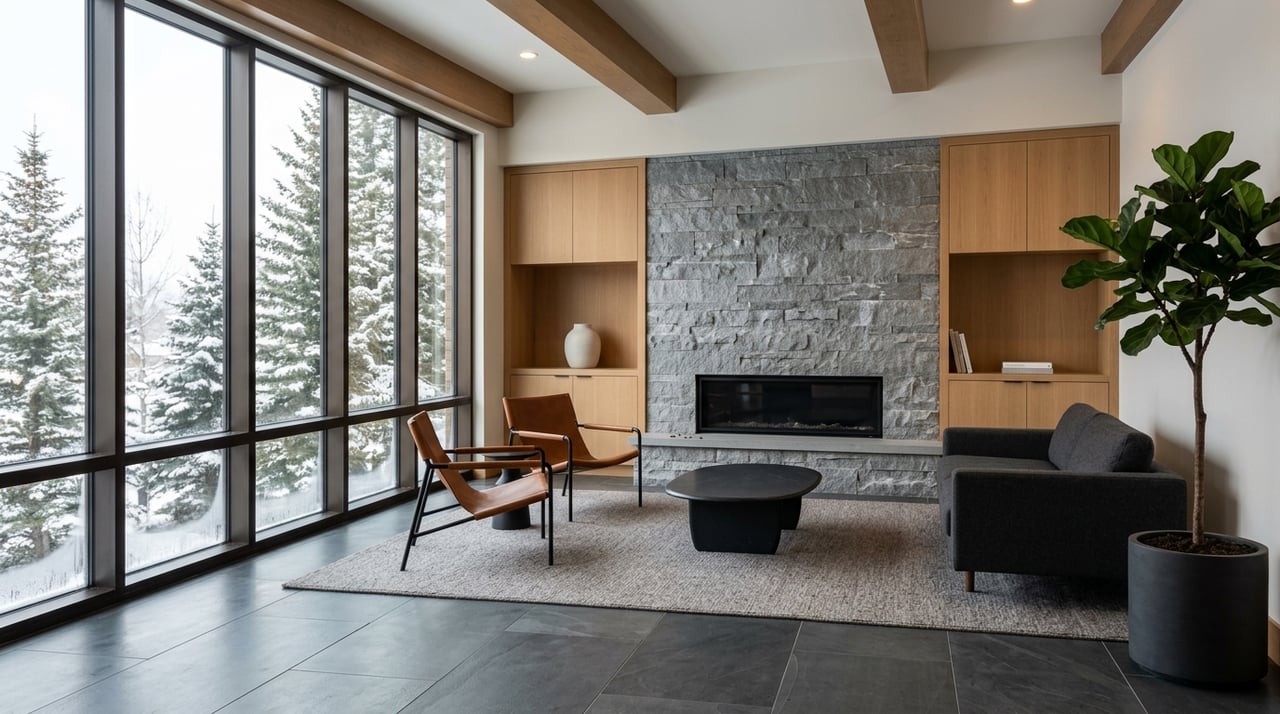
Inside The Mountain Village Condo Lifestyle
July 23, 2026
July 23, 2026
If you want a mountain home that feels easy to use the moment you arrive, Mountain Village condos deserve a close look. For many second-home buyers, the draw is simple: you get direct access to a resort-centered lifestyle without taking on the full maintenance load of a detached mountain house. Understanding how that lifestyle really works, from ski access to HOA structure, can help you buy with more confidence. Let’s dive in.
Mountain Village offers a distinct setting within San Miguel County. It is a separate town from Telluride, covers about 3.27 square miles, and has roughly 1,434 full-time residents, though peak summer and winter weekends can bring visitor populations up to 20,000.
That mix gives the area a unique rhythm. You have a small full-time community paired with the energy of a major resort destination, especially during busy travel periods. For condo owners, that often means an active village environment with strong seasonal momentum.
Mountain Village Center serves as the town’s business district and downtown. It is pedestrian-friendly and lined with condominiums, shops, restaurants, bars, offices, and public plazas, with direct links to ski slopes and summer trails.
Market Plaza adds more everyday convenience. It includes a grocery store, liquor store, town hall, parking, retail, disc golf, and ski access, which helps Mountain Village feel self-contained for short stays and second-home ownership.
One of the biggest appeals of condo ownership here is the car-light routine. Telluride Regional Airport is less than five miles away, and resort information notes that a car is not necessary if you stay in the pedestrian-friendly areas of Telluride and Mountain Village.
That matters if you want a home that is easy to use for long weekends, holiday trips, or extended seasonal stays. Instead of planning every outing around parking and road conditions, you can often walk, ride the gondola, or use shuttle service depending on the season.
The town does provide garages and parking lots for owners and visitors who prefer to drive. Still, the design of Mountain Village clearly favors walking and transit-style movement over car dependence.
In Mountain Village, ski access is not just an amenity. It is a major part of daily life and one of the clearest reasons many buyers choose a condo over a detached home farther from the resort core.
Telluride Ski Resort reports almost 300 inches of snow annually and more than 2,000 skiable acres for a wide range of ability levels. For owners, that creates a lifestyle centered on quick access to the mountain rather than long transitions from home to lift.
The gondola is the signature feature. The town describes it as the first and only free public transportation system of its kind in the United States, connecting Mountain Village and Telluride.
In winter, the chondola runs between Mountain Village Center and the Meadows neighborhood. During shoulder seasons, when the gondola is closed, SMART operates a free bus between the towns.
This network supports a low-friction ownership experience. If your goal is to arrive, settle in, and start enjoying the mountain without much logistical planning, condo living in the resort core can deliver exactly that.
While winter gets much of the attention, the condo lifestyle here is not limited to ski months. Mountain Village also offers direct access to a broader year-round outdoor routine.
The town highlights beginner-to-advanced mountain biking, along with roughly eight miles of groomed winter Nordic and snowshoe trails. Trail access from Mountain Village Center and nearby points reinforces that the area stays active beyond the ski season.
For many buyers, that year-round appeal matters as much as winter access. A condo can serve as a base for summer weekends, fall visits, and quieter shoulder-season stays, not just peak holiday ski trips.
In Mountain Village, some condo buildings function more like resort residences than standard attached housing. Depending on the property, you may find services and amenities that feel closer to a hotel or private club experience.
Examples from local resort-style properties include ski-in/ski-out access, concierge service, housekeeping, ski valet, heated pool access, spa and fitness access, underground or valet parking, shuttle service, steam rooms, hot tubs, and grocery shopping service. Some units also include features such as kitchens, gas fireplaces, balconies, ski lockers, and extra storage.
The amenity picture can be especially strong at properties connected to larger resort offerings. The Peaks fitness club, for example, is described by the town as including a Matrix gym, indoor and outdoor heated pool, waterslide, three-lane lap pool, Peloton bikes, spin cycles, Pilates and yoga studios, and scheduled fitness classes.
For buyers, this can be a meaningful part of the value proposition. If you want a second home that feels turnkey and service-oriented, building amenities may influence your decision as much as square footage or views.
Not all Mountain Village condos deliver the same experience. That is one of the most important things to understand before you buy.
A building may be marketed as ski-oriented, but the real day-to-day setup can vary. For example, one property notes that it is ski-in/ski-out overall, while also clarifying that not every unit has direct ski access and that the ski run is a short walk from most accommodations.
That difference matters in practice. A true door-to-slope layout feels very different from carrying gear for several minutes or relying on a shuttle, especially in winter.
The same principle applies to amenities. Some services may be included through the building, while others may come through a connected resort operation or involve added fees. Buyers should confirm exactly what comes with ownership.
The convenience of condo living comes with a different ownership model than a detached home. In Colorado, the Division of Real Estate explains that the homeowners association is generally responsible for common elements, while each owner is responsible for the unit itself unless governing documents state otherwise.
That can be a major advantage if you prefer less direct responsibility for exterior upkeep and shared property maintenance. At the same time, it means your ownership experience is shaped in part by association governance, budgets, and rules.
The state also advises buyers to review governing and financial documents, understand whether the HOA is professionally managed, check insurance coverage on common elements, and look for possible special assessments. These are not side details. They are central to understanding the actual cost and risk profile of condo ownership.
Maintenance and landscaping decisions are largely handled by the board, and the state notes that maintenance issues are often more common in attached communities such as condominiums and townhomes. That does not make condos a poor choice. It simply means the ownership structure is more shared and more layered.
Mountain Village ownership can involve more than just a building-level HOA. TMVOA, the Telluride Mountain Village Owners Association, serves as the master association for the resort community and is separate from the town government.
TMVOA describes its role as preserving and promoting a vital resort community. Its functions include event sponsorship, gondola funding, grant awards, community research, and economic development.
For condo buyers, that means it is wise to understand whether your ownership experience includes both a building association and a broader master-association structure. Those layers can shape dues, governance, services, and the overall feel of ownership.
A polished condo showing can make ownership look effortless. The real work is understanding what is behind the lifestyle before you commit.
Here are a few practical questions worth asking:
These questions help you compare properties on more than appearance alone. In a resort market, the details behind convenience often matter as much as the finishes inside the unit.
Mountain Village condos tend to fit buyers who want easy access, strong amenities, and a more turnkey second-home experience. They can be especially appealing if your priority is spending more time enjoying the mountain and less time managing a property.
They may also suit buyers who value walkability, service, and year-round recreation from a central base. If you prefer more privacy, more control over maintenance decisions, or fewer shared rules, a detached home may be the better fit.
The key is not whether condos are better than houses in the abstract. It is whether the ownership model matches how you actually want to live when you are in Mountain Village.
If you are weighing condo options in Mountain Village, a local perspective can help you look past the brochure version of resort living and focus on the details that affect long-term enjoyment and value. To explore current opportunities with a calm, informed approach, connect with Patrick Pelisson.
He is widely respected for his deep market knowledge, discretion, and relationship-driven approach. I am committed to guiding you every step of the way—whether you're buying a home or selling a property.